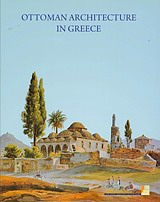
Ottoman Architecture in Greece
Μετάφραση: Elizabeth Key Fowden
Επιμέλεια: Έρση Μπρούσκαρη
Ίhe book is divided into three parts. Part 1 consists of three introductory chapters, the first of which provides a general account of the Ottoman Empire and the Greek lands more specifically, while the second and third discuss the characteristics of Ottoman architecture in Greece. For readers' convenience, Ottoman architecture is divided into secular and religious categοries, though this is no more than a convention, since the boundary between religious and secular architecture is hard to draw. Supposedly "secular" buildings such as bath houses are often part of larger religious-philanthropic-educational complexes.
The chapters on Ottoman architecture serve as an introduction to Part 2, the heart of the book, where the monuments are described region by region. In many cases the regional sections are prefaced by a historical introduction to the main town and its growth under Ottoman rule. An invaluable source for this survey is provided by the 17th century Ottoman traveler Evliya Celebi, who left precious descriptions of many towns and their monuments. Evliya's account' is often exaggerated or inaccurate, but still a rich source of information, which in conjunction will, other sources (historical, archival, archaeological and so forth) helps us to identify and date our monuments.
Αn effort has been made to standardize the descriptions of monuments and to make them as thorough as possible. Each entry contains an account of the monument's history (where that is possible), its dating and its architectural form, including the main phases of repair and restoration. Reference is also made to the new uses to which a number of buildings have been put, in order to give them a role in the country's contemporary cultural life.
The book closes with a time chart, a glossary of (mainly) architectural terms used in the text and which may confuse the non-specialist, and finally, a bibliography. [...]
(from the Introduction, Ersi Brouskari)
| Έκδοση | Αθήνα, Υπουργείο Πολιτισμού, 1η έκδοση, 2008 |
| Μορφή | Βιβλίο |
| Τίτλος Πρωτοτύπου | Η οθωμανική αρχιτεκτονική στην Ελλάδα |
| Θέματα | Μνημεία - Ελλάς Αρχιτεκτονική - Ιστορία Οθωμανική Αυτοκρατορία |
| ISBN | 978-960-214-793-1 |
| ISBN-13 | 978-960-214-793-1 |
| Φυσική περιγραφή | 494σ., 31x24εκ. |
| LEADER | 22 4500 | |
| 001 | 143087 | |
| 005 | 20200903165524.220 | |
| 020 | ## | |a 9789602147931 |
| 020 | ## | |a 9789602147931 |
| 041 | 0# | |a ελληνικά |
| 082 | 14 | |a 725.944 95 |a 720.09 |a 956.016 |2 23 |
| 100 | 1# | |a Συλλογικό έργο |
| 245 | 10 | |a Ottoman Architecture in Greece |
| 250 | ## | |a 1η έκδοση |
| 260 | ## | |a Αθήνα |b Υπουργείο Πολιτισμού |c 2008 |
| 300 | ## | |a 494σ. |c 31x24εκ. |
| 650 | #1 | |a Μνημεία - Ελλάς |
| 650 | #1 | |a Αρχιτεκτονική - Ιστορία |
| 650 | #1 | |a Οθωμανική Αυτοκρατορία |
| 700 | 1# | |a Fowden, Elizabeth Key |e μετάφραση |
| 700 | 1# | |a Μπρούσκαρη, Έρση |e επιμέλεια |
| 765 | 1# | |t Η οθωμανική αρχιτεκτονική στην Ελλάδα |
| 903 | ## | |a €81.0 |
| Τίτλος | Ottoman Architecture in Greece / ; μετάφραση Elizabeth Key Fowden, επιμέλεια Έρση Μπρούσκαρη |
| Κύριος Συγγραφέας | Συλλογικό έργο |
| Άλλοι Συγγραφείς | Elizabeth Key Fowden, Έρση Μπρούσκαρη |
| Έκδοση | Αθήνα, Υπουργείο Πολιτισμού, 1η έκδοση, 2008 |
| Μορφή | Βιβλίο |
| Τίτλος Πρωτοτύπου | Η οθωμανική αρχιτεκτονική στην Ελλάδα |
| Θέματα | Μνημεία - Ελλάς Αρχιτεκτονική - Ιστορία Οθωμανική Αυτοκρατορία |
| ISBN | 978-960-214-793-1 |
| ISBN-13 | 978-960-214-793-1 |
| Φυσική περιγραφή | 494σ., 31x24εκ. |
Σχόλια/Κριτικές
- Συνδεθείτε για να δημοσιεύσετε κριτικές